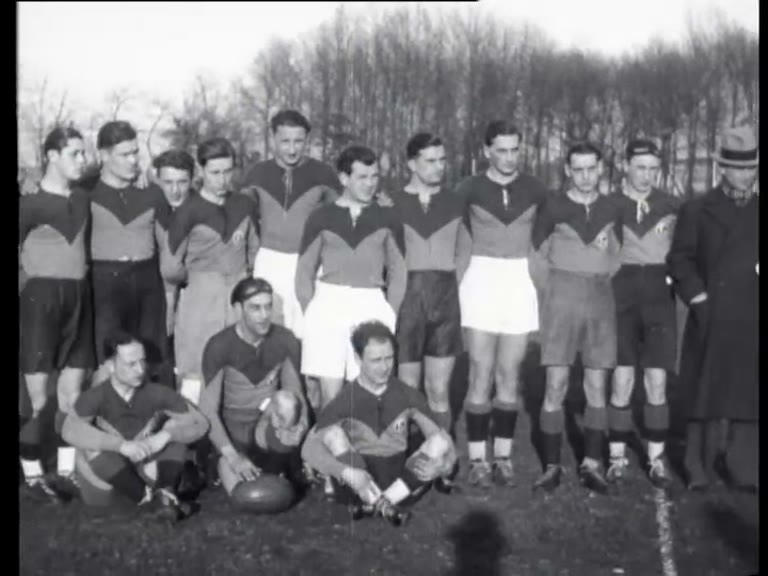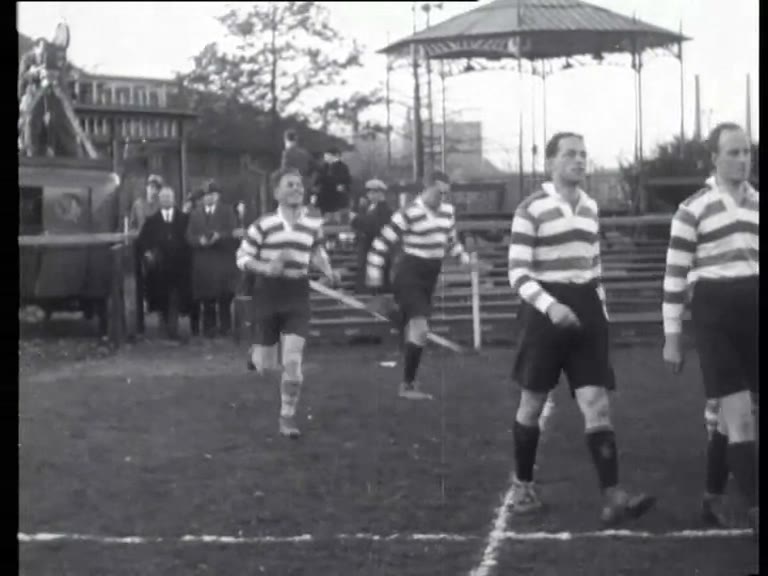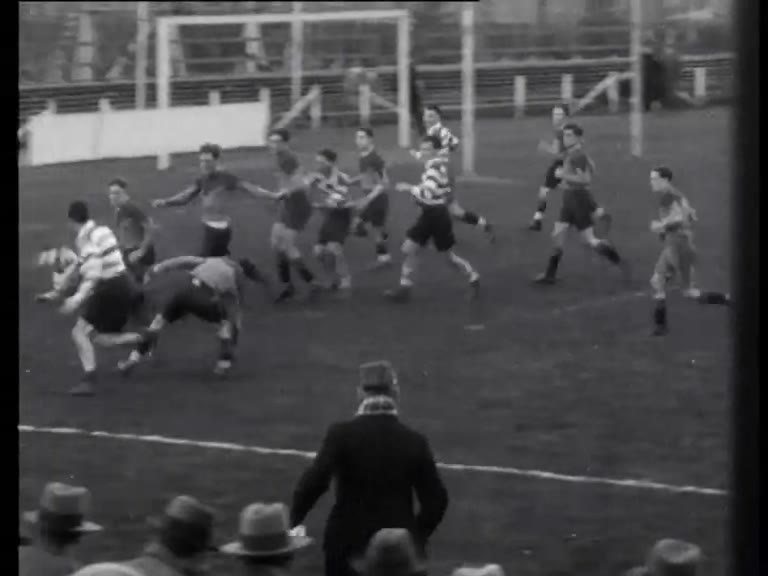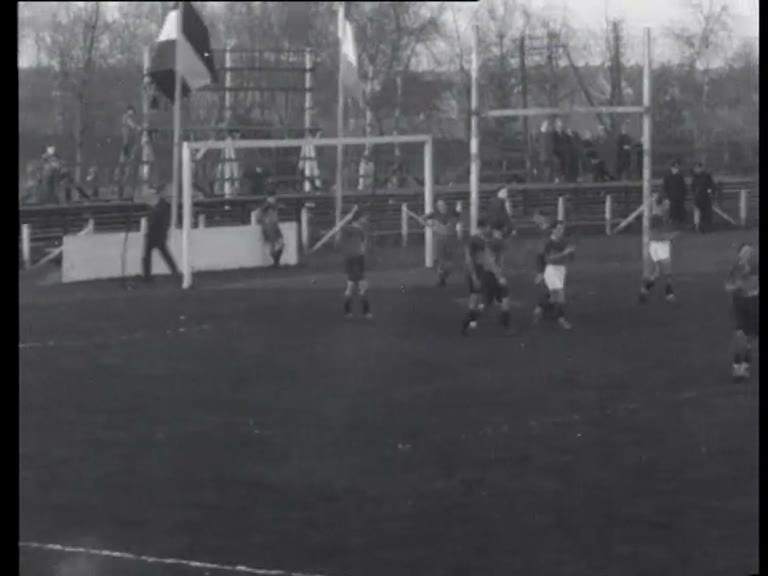
Proudly backed by our partners. See who backs AAC

Menu
The archive

The club archive.

Old AAC photographs, newspaper clippings from the contemporary Dutch press, club documents and the milestones in between, each one told as a story. Who was in frame, what the paper said, where it came from. The archive opens with the founding decade and runs to the present.

← Club history
Jump to an era

Browse by decade.

Eight chapters from 1930 to today. The 1930s lay the foundations, the 1950s sit at the competitive peak, the 1970s launch the Amsterdam Sevens and close out the men's championship era, and the modern chapter covers a new ground, the women's titles, and the return to the Ereklasse.

The 1930s

Where it begins.

The founding decade: an early non-student club, formed in 1930, helping keep organised rugby alive in a country where the universities held the game.

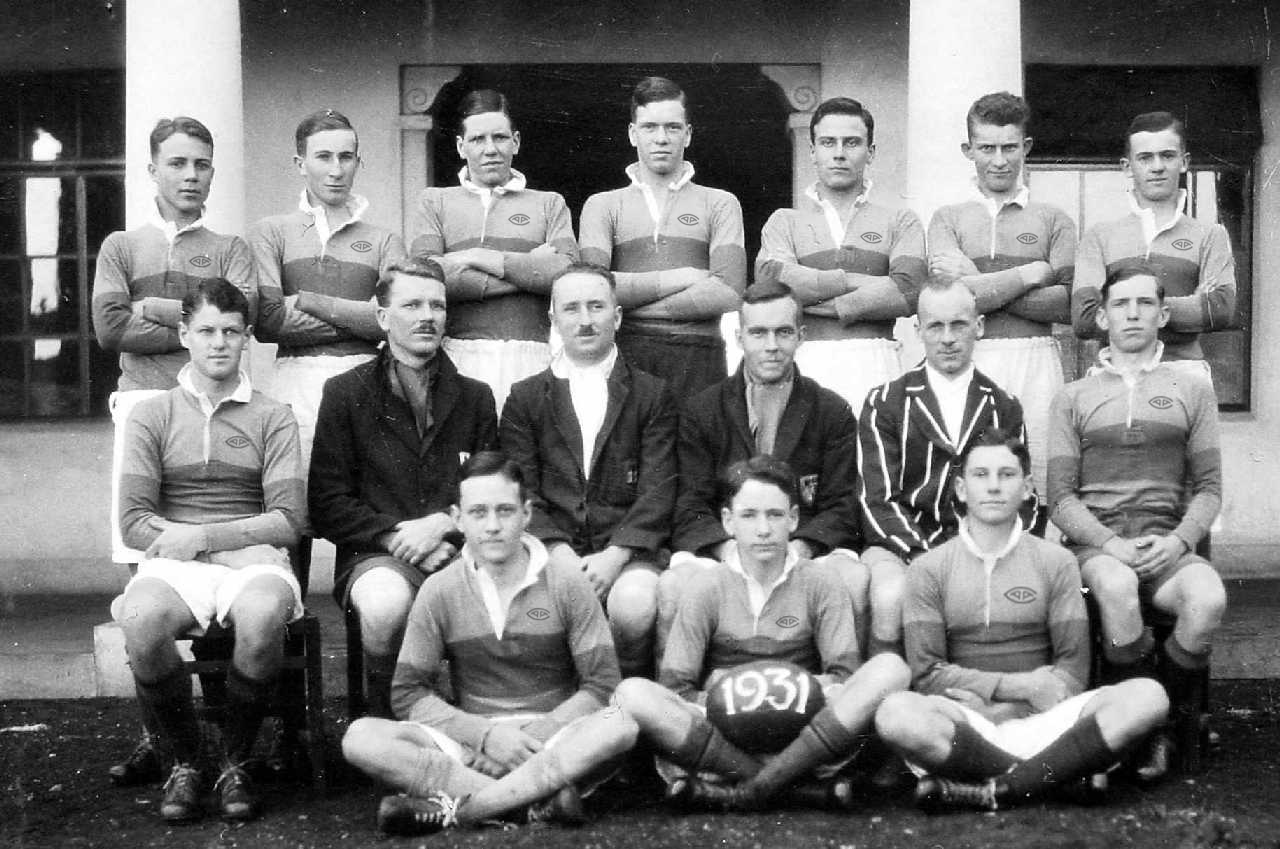
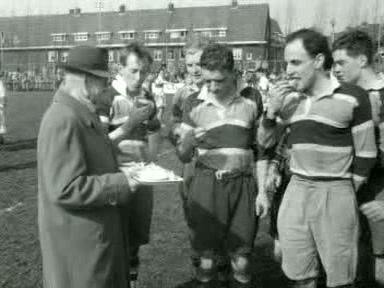
A 1931 team photograph of the AAC rugby side: players in hooped jerseys with club officials, posed together with a match ball marked 1931.
The AAC rugby side in 1931, the oldest known photograph of the club.
Source: club archive. Original photographer unknown; rights being verified.

This is the oldest picture the club has: the AAC rugby side in 1931, the year of its first full season of matches. The rugby section had been founded only months before, on 22 October 1930, by H. Bohlmeijer and T. Wijch, an early non-student club in a game the Dutch universities still carried almost alone.

The team lines up in hooped jerseys with club officials alongside, a match ball marked 1931 set in front. On 1 October that year, captained by Puck van der Heyden, AAC played its first match, a 14–18 loss to ARVC.

Within two years the club was one of just six keeping organised rugby alive in the Netherlands.

Read the full story of the first season

From the contemporary press, 14 Dec 1931.
Source: Het Volk (socialist daily), 15 December 1931, via Delpher. Earliest contemporary AAC result found in a newspaper rather than in club records.

Two and a half months after the club's first match, the socialist daily Het Volk carried a short item on its sports page under the headline "RUGBY / A.A.C.–Amsterdamsche Rugby Club".

AAC's fifteen had beaten the Amsterdamsche Rugby Club the previous day, Sunday 14 December 1931, by five points to nil. The two sides went into the break level at 0–0; every point came after half-time.

It is the earliest specifically dated AAC result that survives in a contemporary newspaper rather than a later club history. The paper printed the opponent as "Amsterdamsche Rugby Club". Whether that is the same side as ARVC of AAC's 1 October 1931 debut is not established in the archive.

From the contemporary press, 27 Dec 1932.
Source: Revue der Sporten, 27 December 1932, via Delpher.

When the Nederlandse Rugby Bond re-formed on 1 October 1932 (after an earlier body had lapsed in 1923), the revived sport was anchored by four established clubs: ARVC, RC Eindhoven, the Hilversumsche Rugby Club and the Delft students' club DSR-C.

Three months later this Revue der Sporten report records six clubs already attached to the bond. The four founders plus Haarlem and "Amst. Athl. Club", AAC. Roughly 300 registered players between them.

Within three months of the bond's re-formation, then, AAC was one of the half-dozen clubs carrying organised rugby in the country. The same report noted that hard playing pitches were scarce in Amsterdam.

Milestone, 15 Oct 1933.
Source: the published club history of RC 't Gooi.

A dated early result that survives outside AAC's own records. On 15 October 1933 the club played a combined Gooi-region team at home and won 14–9.

The fixture is preserved in the published history of RC 't Gooi rather than in anything AAC kept itself. It is the kind of detail the early seasons leave only in fragments, in the records of other clubs and in newspaper indexes.

From the contemporary press, 15 Apr 1940.
Source: De Sumatra post, 15 April 1940, reporting an interview with ir. Addicks in Sport in Beeld magazine.

A decade after AAC was founded, the rugby bond's new chairman, ir. Addicks, sat down with Sport in Beeld for a retrospective on the Dutch game.

He traced its emergence to English servicemen interned at Groningen during the First World War, and characterised the years 1923 to 1930 as a period in which the country sustained only one rugby club at a time.

By that account, AAC's October 1930 founding came right at the bottom of the curve, just as the sport was reviving from its lowest ebb. The club was one of the first new pieces of that revival.

1939 – 1948

First titles, then a war.

AAC reaches the top of the Dutch game just as the war arrives. A first national title in 1939–40, two more during the war years, a post-war tour to Liverpool, and another title after it.

From the contemporary press, 12 Feb 1939.
Source: Delftsche courant, 13 February 1939, via Delpher.

On 12 February 1939, at the Famos-terrein in Amsterdam, AAC met DSR-C in a match the Delft paper called the next day om het kampioenschap van Nederland, for the championship of the Netherlands.

DSR-C won 6–0 and were crowned Dutch champions; AAC finished runner-up. It is a single contemporary source and standard newspaper-OCR caveats apply, but it confirms AAC independently as one of the country's two leading sides in 1938–39.

A natural prelude to what came next. The following season, 1939–40, AAC won the first of its eleven national championships.

Milestone, 1939–40.
Source: club records, corroborated by the modern Ereklasse champions list.

AAC's men's first XV won the first of its eleven national championships in season 1939–40, eight full years after that 5–0 win over the Amsterdamsche Rugby Club, ten since the founding meeting in October 1930.

The contemporary final report from this season has not been located in the archive. It is recorded in the modern Ereklasse champions list and in the club's own honours board, and is implied by the runner-up finish the previous season.

Milestone, 1944–45 · 1945–46.
Source: club records.

Two further national championships came in the closing season of the Second World War and the first season after it, 1944–45 and 1945–46. AAC was the country's leading club at the moment Dutch sport restarted.

Specific match records from these wartime seasons are sparse in the surviving archive. The titles themselves are well-attested in the modern champions list.

From the contemporary press, Jan – Oct 1946.
Sources: Het Parool, 21 January 1946; Zutphensch dagblad, 29 June 1946; via Delpher.

The club's own history frames the 1946 trip to Liverpool as AAC's first club tour, a journey made to thank the city that liberated Amsterdam.

Two contemporary papers corroborate the trip and add context. Het Parool of 21 January 1946 reported that the visitors would lodge with Liverpool rugby enthusiasts and that the Nederlandsche Rugby Bond was its organiser. The Zutphensch dagblad of 29 June 1946 placed it within the post-war Amsterdam–Liverpool town-twinning ("adoptatie") scheme; Liverpool youth rugby teams paid a reciprocal visit that October.

The press of the day referred to the party simply as Amsterdam rugby players rather than naming AAC. AAC being the senior Amsterdam club, those players were in practice overwhelmingly its men.

Read the full story of the 1946 Liverpool tour

Milestone, 1948–49.
Source: Ereklasse champions list.

A fourth national championship in ten years. The post-war seasons saw AAC settled at the top end of the country's small senior pool; the four-decade championship era had begun.

The 1950s

The peak years.

The decade of the Van Broekhuizen-beker, the first Dutch Sevens title, and a three-in-a-row national championship run in the middle of it. The Dutch game small enough that one club could control the top of it for years at a time.

From the contemporary press, 14 Apr 1952.
Sources: five contemporary newspapers, namely De Telegraaf, De Maasbode, Het Vaderland, Het Vrije Volk, and the Den Bosch Provinciale Noord-Brabantsche courant.

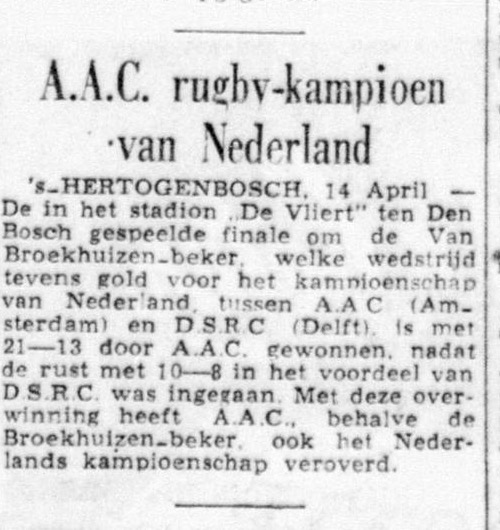
Easter Monday, 14 April 1952. At De Vliert in 's-Hertogenbosch, the first official rugby match ever played at the stadium, AAC beat DSR-C 21–13 in the final of the Van Broekhuizen-beker.

DSR-C led 10–8 at the break; AAC pulled clear in the second half to 21–10 before a late DSR-C penalty closed the score. The mayor of 's-Hertogenbosch, mr. H. Loeff, presented the cup to the Amsterdam side.

Five contemporary papers headlined the result the next day. Some called the final the Dutch national championship; in 1951 the same competition had been called the "officieuze" (unofficial) championship. The Van Broekhuizen-beker sits separately from the eleven Ereklasse titles on the modern honours board: a distinct, well-attested cup honour from a competition the press of the day already half-treated as the country's title.

A scan of a 15 April 1952 De Telegraaf clipping headed "A.A.C. rugby-kampioen van Nederland", reporting AAC's 21–13 win over DSR-C in the Van Broekhuizen-beker final at De Vliert in 's-Hertogenbosch.
"A.A.C. rugby-kampioen van Nederland", De Telegraaf, 15 April 1952.
Source: De Telegraaf, 15 April 1952, via the Royal Library / Delpher.

The Telegraaf's report the morning after the final, printed under the headline "A.A.C. rugby-kampioen van Nederland": AAC, rugby champions of the Netherlands.

A short item on the sports page set out the result: at De Vliert in 's-Hertogenbosch, AAC had beaten DSR-C 21–13 in the Van Broekhuizen-beker final, and with that win, the paper said, had also taken the Dutch championship.

Milestone, 1953.
Source: club records.

The club's own history records 1953 as the start of an AAC sevens tradition that would repeat itself many times: fifteen national Sevens titles in total, by the club's count.

Almost two decades before AAC launched its own sevens tournament in Amsterdam, the seven-a-side game was already part of how the club won things.

From the contemporary press, 30 Apr 1954.
Source: Het Binnenhof, 1 May 1954, via Delpher.

Het Binnenhof's round-up of the previous afternoon's sports day at Voorburg printed it plainly: AAC had beaten Nijenrode (Breukelen) 23–5, and thereby became champions of the Netherlands.

Independent contemporary confirmation of the 1953–54 national title, the first of a three-in-a-row that would carry AAC to the middle of the decade.

From the contemporary press, 12–15 May 1955.
Sources: Algemeen Dagblad (12 May 1955); Algemeen Handelsblad (13 May 1955); via Delpher.

Two daily papers carried the same story in the same week: AAC and DSR-C had finished the regular season level on points and would meet in a deciding match for the title in Amsterdam on Sunday 15 May 1955.

The modern champions list records AAC as the 1954–55 champion. The contemporary report of the decider itself was not located in the archive, but the build-up reporting independently confirms how close that season was. The second of the three-in-a-row.

Milestone, 7 Nov 1954.
Source: the published club history of Rugbyclub Hilversum.

By the mid-1950s AAC was the benchmark for newer sides. When Rugbyclub Hilversum, later the most successful club in Dutch rugby, played its first official match on 7 November 1954, the opponent was AAC.

RCH did not record its first win over AAC until a 10–0 result the following season, 1955–56.

Milestone, 1953–54 · 1954–55 · 1955–56.
Source: Ereklasse champions list; 1953–54 and 1954–55 corroborated by the clippings above.

Three consecutive national championships in the middle of the decade. AAC's first XV was the country's dominant side; the rebuilt Dutch rugby pyramid still small enough that the same club could control the top of it for years at a time.

The 1960s

Three more titles.

The championship habit extended but no longer continuous (1960–61, 1963–64, 1968–69), as the Dutch game grew and other clubs challenged more often.

Milestone, 1960–61.
Source: Ereklasse champions list.

The first of three further national titles spread across the 1960s: the championship habit of the previous decade extended, but no longer continuous. By now the Dutch game had grown and other clubs were challenging more often.

Milestone, 1963–64.
Source: Ereklasse champions list.

A second title in the decade, three years after the last. The contemporary match-by-match record from these seasons is thin in the surviving archive; the title itself is recorded on the modern honours list.

Milestone, 1968–69.
Source: Ereklasse champions list.

AAC's tenth Ereklasse title. The last full-decade gap before the one that came after the 1976–77 championship, when the Dutch game broadened and AAC stopped winning the league.

The 1970s

The busiest decade.

The club at full stride: the decade it launched the Amsterdam Sevens and won the last of its eleven men's national titles.

A black-and-white photograph of a 1970s rugby lineout: a bearded AAC player jumping for the ball against opponents in white-hooped jerseys, with the clubhouse and a floodlight behind.
A lineout at the old ground, sometime in the 1970s.
Source: the club's earlier website. Original photographer unknown; rights being verified.

A lineout caught in mid-jump somewhere in the 1970s: a bearded AAC player rising for the ball against a side in white-hooped jerseys, the clubhouse and a floodlight standing behind the pitch.

It was the club's busiest decade. AAC had staged the first Amsterdam Sevens in 1972, with twelve teams, the Barbarians among them, and the most recent of its eleven men's national titles came in 1976–77.

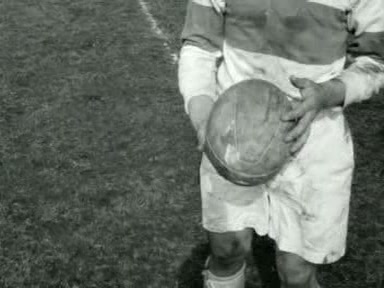
A black-and-white close-up of an AAC player in a white jersey lettered AAC, bending forward and reaching both hands down to pick up a rugby ball from the grass.
An AAC player gathers the ball, sometime in the 1970s.
Source: the club's earlier website. Original photographer unknown; rights being verified.

A close, ground-level frame from an AAC match somewhere in the 1970s: a curly-haired player in the white shirt, the letters AAC across the back, bending in to gather the ball off the grass.

One of a small handful of black-and-white action pictures that have survived from the club's busiest decade: the years of the first Amsterdam Sevens and the last of the eleven men's national titles.

From the contemporary press, 13–14 May 1972.
Source: Het Parool, 10 May 1972, via Delpher.

A few days before the weekend, Het Parool ran the announcement: AAC was staging an international seven-a-side tournament on Saturday 13 and Sunday 14 May 1972, with twenty-four teams.

Saracens, Neath, Fylde and the eventual winner Walsall. Cambridge University. London New Zealand. Frankfurt. Prague. The paper placed the tournament at Sportpark De Eendracht, the ground AAC is otherwise documented as moving to only in 1997. The association with De Eendracht therefore runs back at least this far.

By the tournament's own account the idea came from the father of Leo Bogers, himself a later AAC president and long-time editor of the tournament programme. It grew to roughly 40 teams in its second year. The Amsterdam Sevens has been the club's flagship event ever since.

Read the full story of the first Amsterdam Sevens

Milestone, 7 May 1972.
Source: club records.

Six days before staging the first Amsterdam Sevens, AAC won the international seven-a-side tournament at Hilversum on 7 May 1972.

A small coincidence of the calendar that says something about where the club's sevens centre of gravity was that spring.

Milestone, 1976–77.
Source: Ereklasse champions list; the club has not won the Ereklasse since.

Eleventh national championship in the men's first XV, and the most recent. The club has not won the Ereklasse since.

It was a fitting closing note for the championship era. The Dutch game continued to broaden after it; AAC's competitive centre of gravity moved, in time, to the Amsterdam Sevens, then to the women's section, and most recently to a return to the Ereklasse in 2024.

The 1980s

Women's rugby arrives.

A small section, then a strong one. AAC's women's side was founded in 1984, and would go on to become one of the country's most successful.

Milestone, 1984.
Source: club records; the women's first national title would follow in 2007–08.

AAC's women's section was established in 1984, a decade or so into the Dutch women's game itself.

Over the next forty years the side became one of the strongest in the Netherlands. The first of its eight national titles came in 2007–08, followed by three more in a row through 2010–11, then further championships through the 2010s and 2020s. The most recent, the club's eighth, was sealed by a 17–0 final win over RUS in Amsterdam on 25 May 2025.

Read the full story of AAC's women's rugby

1997

A new ground.

From 1997 the club has played at Sportpark De Eendracht, home of the National Rugby Centre and of Dutch international rugby.

Milestone, 1997.
Source: club records. The association with De Eendracht runs back at least to 1972 (the Sevens tournament was staged there that year), but the move as a home ground dates from this season.

From the 1997 season on, AAC has played at Sportpark De Eendracht in Amsterdam's Sloten neighbourhood, the home of the National Rugby Centre Amsterdam (NRCA) and of the Dutch national teams.

The NRCA stadium opened the same year. The ground has since become the European home base for the Toyota Cheetahs during their EPCR Challenge Cup campaigns, now into a third consecutive season.

2020 – now

Jubilee, and a revival.

Ninety years, ninety-five, and a hundred to come. A new club website, a return to the Ereklasse for the men, an eighth national title for the women, and the inaugural Coach Summit at the NRCA.

90-year jubilee: programme and motto
Source: club records.

The club marked its ninetieth year in 2020 under the motto Veni vidi vici: we came, we saw, we conquered. A jubilee that landed in the worst possible year for sport, but a club anniversary nonetheless.

Five years later AAC marked its 95th year, with the centenary still ahead in 2030.

Milestone, Oct 2021.
Source: club records.

In October 2021 the club's long-running WordPress site was retired and a new website launched on a new platform. The current aacrugby.com is the successor, the third or fourth distinct iteration of an AAC web presence.

Milestone, 2023–24.
Source: club records; the men have remained in the Ereklasse since.

After a long absence from the top division, AAC's men won promotion back to the Ereklasse out of the 2023–24 season. The club describes the Ereklasse as where it has historically belonged.

The 2025–26 Ereklasse season closed with AAC tenth of twelve and retaining its top-division place. The May 2026 head-coach announcement recorded that both the 1st and 2nd XVs had achieved three promotions in the past three seasons, the 2XV now in the Eersteklasse, with a fourth promotion sealed in May 2026 at Gouda.

Milestone, 25 May 2025.
Source: club records and Rugby Nederland; the women's eighth national title overall.

AAC's women won their eighth national title in 2024–25, sealed by a 17–0 final win over RUS in Amsterdam on 25 May 2025. Eight Dames Ereklasse titles place AAC second on the women's all-time table behind SRC Thor.

A year later, in the 2025–26 season, the side reached the Dames Ereklasse final again, against RC Waterland on 30 May 2026, as defending champions.

Milestone, 2025.
Source: club records; the Coach Summit announcement of August 2025.

AAC's 95-year jubilee season. In August the club hosted the inaugural two-day The Rugby Site Coach Summit (23–24 August 2025) at the National Rugby Centre, with Rusty Earnshaw, Darryl Suasua and Aaron Jones as speakers.

The summit returns for a second edition on 22–23 August 2026, confirmed in the May 2026 head-coach announcement. The centenary year, 2030, is now five seasons away.

Help fill the gaps

Contribute to the archive.

The archive grows when alumni and members share what they have. Team photos from any decade, match-day pictures, tour snapshots, club documents, old programmes from the Amsterdam Sevens: anything from the club's past helps. Get in touch and we'll take it from there.

The same goes for corrections. Where the archive has used contemporary Dutch press from the Delpher archive to anchor a date or a result, the original reporting still occasionally diverges from later club lore. If you spot something that doesn't match what you remember or have on paper, please let us know.

Where this comes from

Provenance.

Photographs are drawn from the club's own records and its earlier websites. For older pictures the original photographer is often unknown and copyright has not been confirmed. Until it is, those pictures appear here as captioned placeholders rather than published images.

Newspaper clippings are summarised from the Royal Library's Delpher archive of digitised Dutch newspapers. Each entry names the paper and its publication date so the original can be looked up. Quoted excerpts are short paraphrases for context, not facsimiles.

Where contemporary press and the club's own history diverge (for example, on whether the 1952 Van Broekhuizen-beker was the Dutch championship), the archive notes both. The Ereklasse champions list is the modern authority for what counts as a national title; the eleven men's championships and eight women's championships shown here all appear on it.

If you hold the rights to anything shown here, or can fill in a photographer, a date or a missing name, get in touch.